Buying a Top-Floor Apartment in Paris: Benefits and Things to Check

In Paris, top-floor apartments are highly sought after and often very expensive. More natural light, unobstructed views of the rooftops, and no neighbors above—these are real advantages that can justify the higher price.
But a top-floor apartment isn’t always synonymous with comfort. Under the roof, the heat can become unbearable in the summer. A poorly maintained roof can lead to costly repairs. Furthermore, a sixth-floor apartment without an elevator isn’t suitable for everyone.
Before letting yourself be swayed by the view or the natural light, here are the key points to check so you can make an informed decision when buying atop-floor apartment in Paris.
6 Things to Check Before Buying a Top-Floor Apartment
Why are top-floor apartments so sought-after in Paris?
More light and often unobstructed views
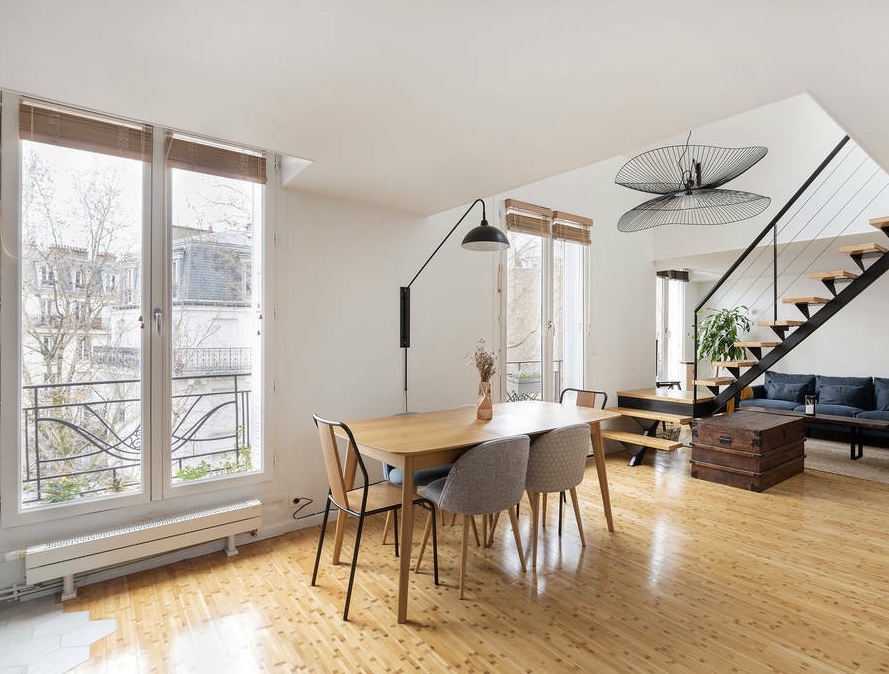
This is the primary advantage of a top-floor apartment: natural light. By being higher up, you’re less likely to be in the shadow of neighboring buildings or have people looking up at you from lower floors.
In Paris, where streets are sometimes narrow and buildings are close together, a few floors can make a real difference. A sixth-floor apartment can enjoy much more natural light than a unit on the second floor of the same building.
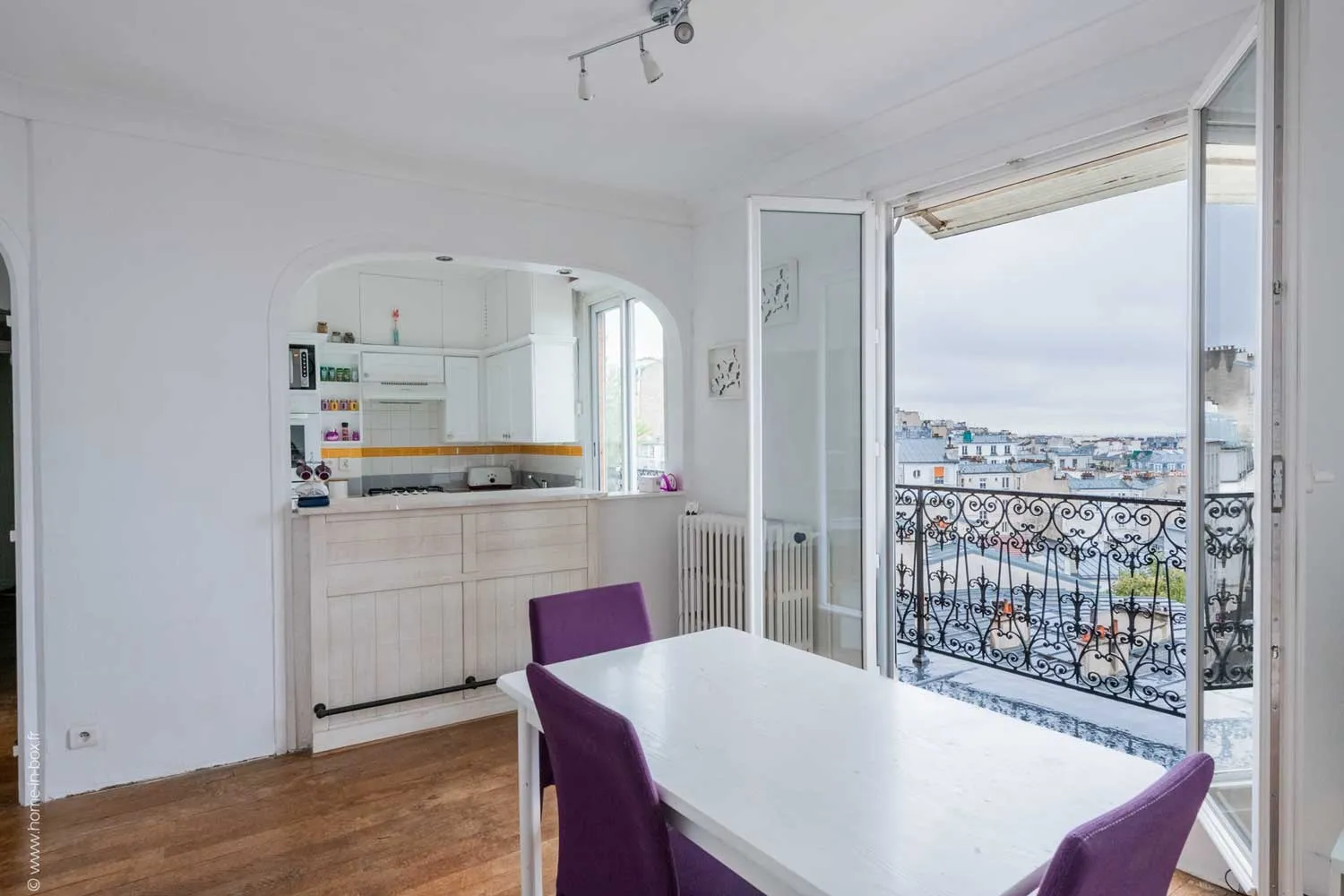
The views are another major draw. Zinc roofs, chimneys, Parisian landmarks, or simply a clear sky—these are all highly sought-after features.
Be careful, however: the top floor does not automatically mean a bright apartment. The building’s orientation, the size of the windows, and the presence of taller buildings nearby remain key factors.
More peace and quiet
Not having neighbors above you is a significant advantage. No more footsteps, furniture being moved, or objects falling onto the hardwood floors.
That doesn’t mean, however, that the apartment will be perfectly silent. Street noise can travel up to the upper floors, and technical equipment installed on rooftops can sometimes cause disturbances.
Peace and quiet therefore also depend on the surroundings and the quality of sound insulation.
The Roof and Insulation: Two Points to Examine Closely
Living on the top floor often means living directly under the building’s roof. This is a unique situation that warrants some thorough checks before buying.
Check the condition of the roof
Roof maintenance is essential to prevent water leaks and moisture problems.
Before buying, you should find out:
- When the roof was last renovated.
- Whether any leaks have been reported in the building.
- Whether roofing work is planned or has already been approved.
- What budget the homeowners’ association has set aside for this work.
This information is generally included in the minutes of general meetings and can be supplemented by information requested from the property manager.
An important point: The roof is generally considered a common area. Its repair is therefore funded by the co-owners according to the rules for allocating expenses, and not solely by the owner of the top floor.
Thermal insulation: a matter of comfort
An apartment located between two occupied floors indirectly benefits from the heat of neighboring units. On the top floor, when it is located directly beneath a poorly insulated roof, heat loss can be significant.
Consequence: more heating in the winter and temperatures that can sometimes be unbearable in the summer.
The Energy Performance Certificate (EPC) is an initial indicator, but it is not enough. You should also look into the insulation of the attic or roof slopes and any work that may have already been done.
It’s also helpful to check whether insulation improvements can be made from theinside of the apartment or if they require work on common areas.
Our advice: Before buying a top-floor apartment under the roof, always ask for any available information on the roof’s insulation. A beautiful interior renovation does not guarantee that the home is properly insulated.

How can you prevent a top-floor apartment from overheating?
With heat waves becoming increasingly frequent, summer comfort has become a major concern for homebuyers in Paris. Top-floor apartments are particularly affected.
A roof exposed to the sun all day can accumulate a lot of heat and release it into the apartment, especially in the evening. In a poorly insulated attic apartment, temperatures can quickly become unbearable.
How can you assess summer comfort?
During a viewing, there are several factors worth paying attention to:
- Orientation: A south-facing apartment receives significant sunlight, while a west-facing one can intensify the heat in the late afternoon. Conversely, a north-facing apartment, without direct sunlight, reduces the risk of overheating.
- Skylights: They let in light but can contribute to overheating if they lack effective sun protection.
- Ventilation: A dual-aspect apartment, where you can create a draft, will be easier to cool.
- Insulation: A properly insulated roof limits heat gain during the day.
The Energy Performance Certificate (DPE) also includes a summer comfort indicator, though it does not replace an assessment of actual conditions.
Can air conditioning be installed?
This is a question to ask before buying, not after. In a Parisian building, installing air conditioning with an outdoor unit requires authorization from the homeowners’ association and, depending on the work involved, a zoning permit.
Therefore, you should never assume that it will automatically be possible to install air conditioning in an attic apartment.
Top Floor with or without an Elevator: An Important Consideration
In Paris, many older buildings do not have elevators. Climbing five or six flights of stairs on foot may be perfectly manageable today, but it can become more of a challenge as you get older.
This is a point that buyers don’t always give enough thought to. An apartment that’s pleasant to live in at age 40 won’t necessarily be so at age 65, especially as mobility becomes more difficult.
The elevator also plays a role in the property’s value. A top-floor apartment with an elevator is more sought-after than a comparable unit without one. This is an advantage to consider at the time of purchase, but also with a view toward a future resale.

Terraces and Attics: Be Careful About What You’re Actually Buying
Top-floor apartments can offer spaces that are particularly sought-after in Paris: a rooftop terrace, a convertible attic, or the opportunity to gain a few square meters.
But before considering any renovations, you need to verify who actually owns these spaces.
A terrace isn’t always a private area
A terrace accessible from an apartment may be a common area for which the owner has a right of private use. This distinction is important: having exclusive use of a terrace does not mean you are free to carry out renovations there.
Installing a pergola, changing the flooring, or making certain modifications may require the approval of the homeowners’ association.

The attic space does not necessarily belong to you
Even when it is accessible only from an apartment, the attic space may belong to the condominium association. Therefore, simply having access to it is not enough to be able to convert it or incorporate it into your living space.
Before buying a property with the intention of claiming this space, you must review the condominium bylaws, the title deeds, and the necessary permits.
Is a top-floor apartment worth more?
In Paris, the top floor is a sought-after feature that can justify a higher price than that of an apartment located lower down in the same building.
But it’s not the top floor itself that creates value. It’s the qualities it offers.
A bright apartment with an unobstructed view, an elevator, and a terrace can sell for significantly more than a comparable unit on lower floors.
Conversely, a sixth-floor apartment without an elevator, under a poorly insulated roof, may sell for less than an apartment on the third or fourth floor.
What Really Makes the Difference
Checklist Before Buying a Top-Floor Apartment
Before committing, take the time to check these few points.
Roof and Insulation
- Review the most recent minutes from general meetings to identify any roof repairs and potential leaks.
- Examine the Energy Performance Certificate (EPC) and inquire about the roof insulation.
Day-to-Day Comfort
- Assess the amount of natural light, the orientation, and views of neighboring buildings.
- Check for the risk of overheating in the summer and options for cooling.
- Consider whether or not there is an elevator.
Co-ownership and Floor Area
- Verify the rights associated with any terrace or attic space.
- Examine the Carrez area and the actual usable space in attic rooms.
Price
- Compare the asking price with that of properties offering similar qualities and constraints.
Should you buy a top-floor apartment in Paris?
Atop-floor apartment can offer a very pleasant quality of life in Paris: more light, unobstructed views, and much-appreciated peace and quiet.
But these advantages shouldn’t make you overlook the condition of the roof, thermal comfort, or the challenges associated with the lack of an elevator.
{{cta-vert-en}}
The latest news from the Paris real estate market
All news